
Finding the World
and turning 40

In my yard, hands on my hips, I look down at the collage of green foliage at my feet. I look for the familiar whorls and hues of ephemeral leaves. I count seven Bloodroot blossoms, little yellow faces with their manes of white. My favorite stage of their growth is just before the bloom when the lobed leaf is wrapped around the stem like a cloak. The flower appears to be holding its face in despair. Staring down at them, I feel my arms begin to wrap around my body.
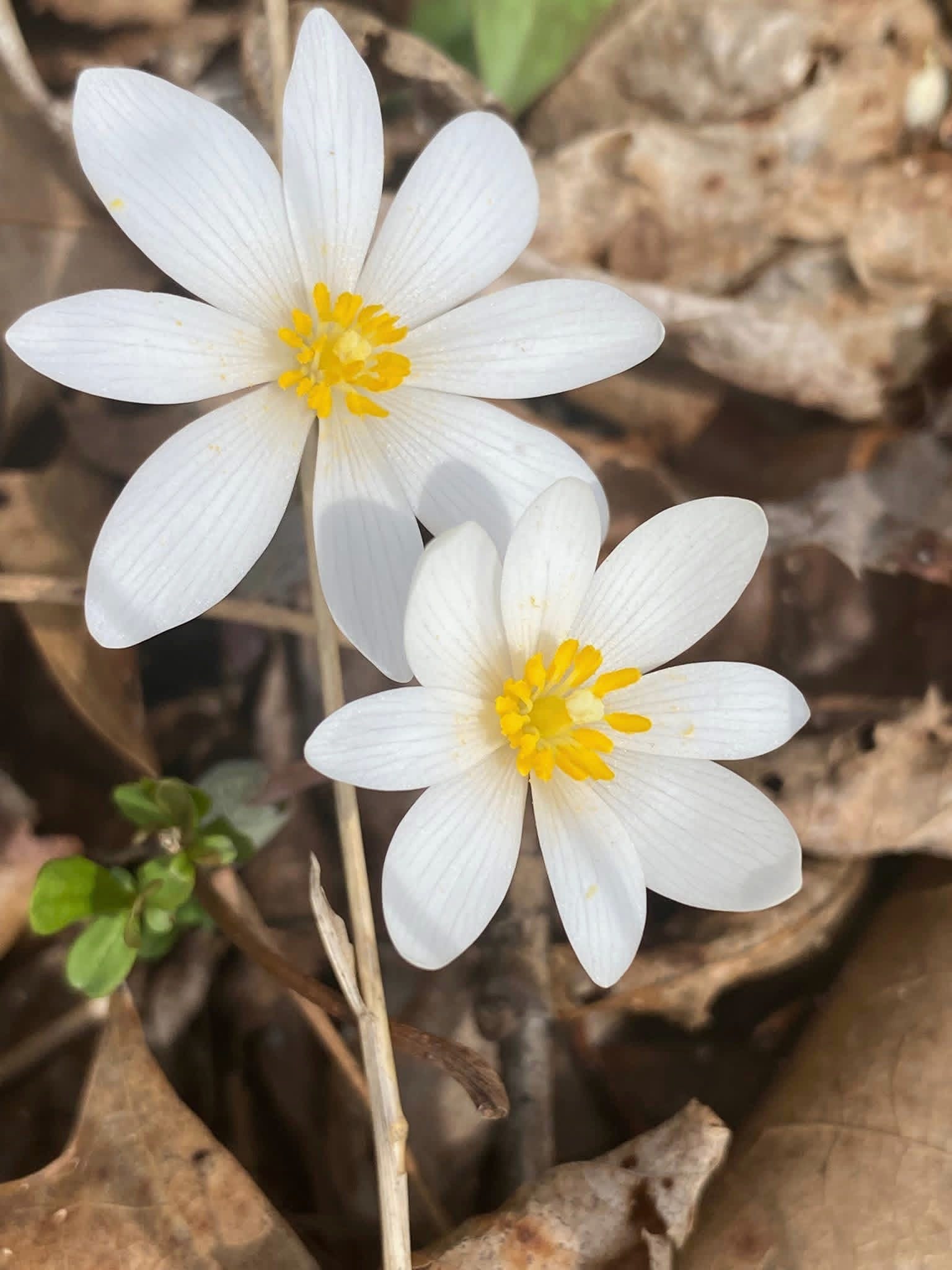
In the dark underlands of soil, caverns and pockets of air allow the elixir of light and water to beckon a tendril from a woody capsule called a seed. The existence and magic of seeds is a whole universe of wonder all its own. The codes for expand and unfurl. The makeup of magenta and violet. The geometry of petal and petiole. The registry of medicine and defense are all secreted away in a granule. Have you ever seen a tobacco seed? It’s smaller than a coffee grain. The gargantuan Sequoia tree—one of the largest in the world—comes from a seed so small that you can balance two on your fingertip. The pinecone itself can fit—with room—in the palm of your hand.
An abandoned recliner. A used diaper. Beer cans. A mouse-chewed mattress. These are just a few things I encountered last year while walking a wooded area near some railroad tracks. Among the debris, though, were deeply lobed leaves waving a green welcome from their tall stems. Bloodroot. The dainty white petals had already come and dispersed. I realized that I stood in a large grove of them. I went back the next day with a shovel, careful not to get their blood on my hands.
This was supposed to be an essay about me. About how I am turning 40 tomorrow. About how I still feel like a child that shouldn’t be taken seriously. Shouldn’t I be grown up by now? Shouldn’t I be part of a solution? What good am I staring at flowers? Am I done hiding in the woods yet? But here I am, still dilly-dallying in the dirt. Here I am, more curious than knowing. Here I am, still achieving mysterious worlds. The poet William Stafford wrote one of my favorite poems, “The Day Millicent Found the World”:
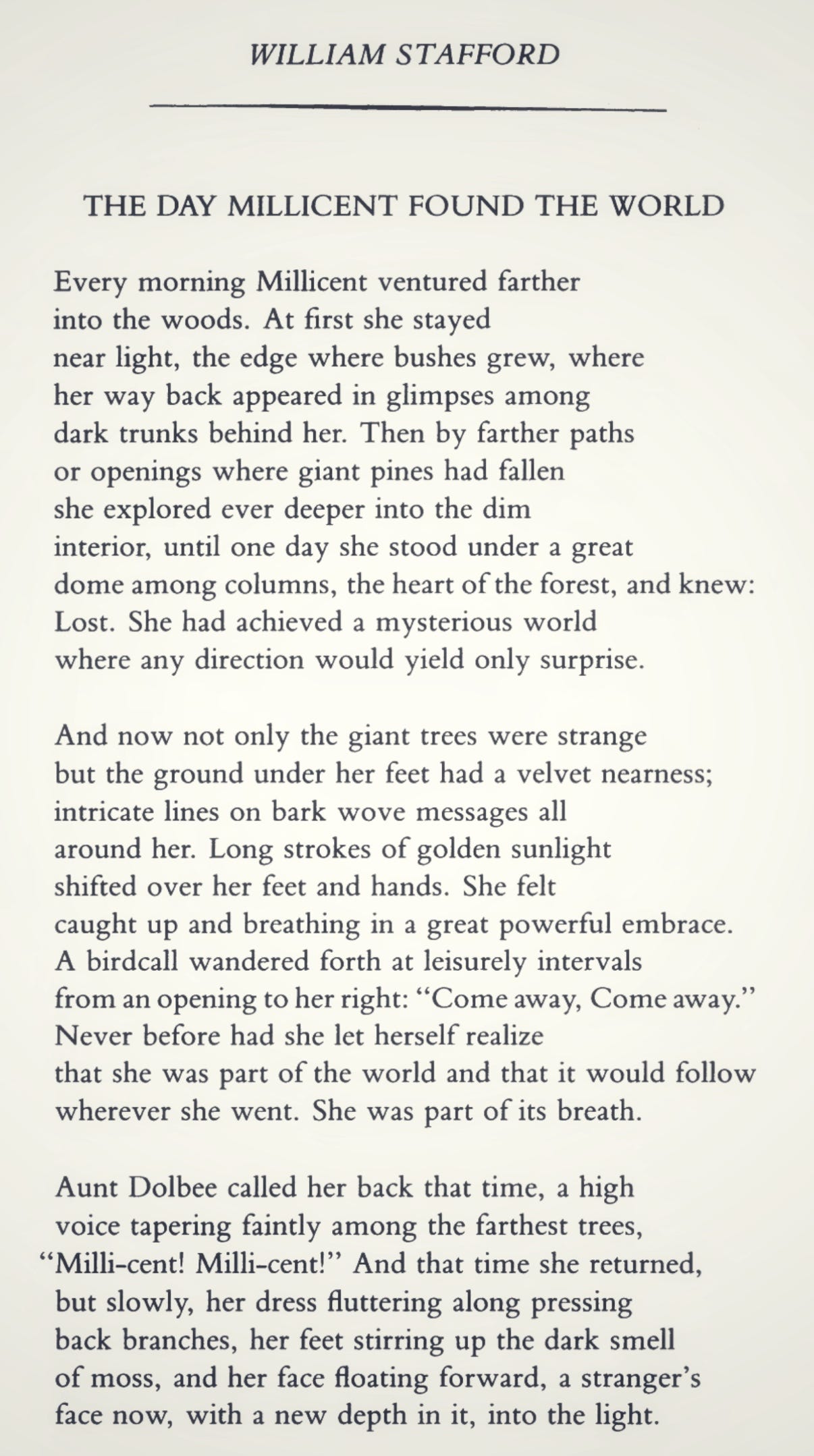
But instead, here I am, a hand lens in one hand, binoculars in another, always trying to see new ways forward but getting sidetracked by
The Bloodroot, like many plants, develops underground limb-like appendages called rhizomes. Ginger is a rhizome. Many spring ephemerals—the Mayapple, Skunk Cabbage, Ostrich Fern---grow from rhizomes. They store nutrients and send nodes and roots out into the soil, allowing for a plant to clone itself. The Bloodroot gets its name from the poisonous red sap within its rhizome. Sometimes I reminisce about the days where I didn’t know about the plant’s red sap. Sometimes I imagine that feeling of looking into a pure, white flower with blood mysteriously in its name.
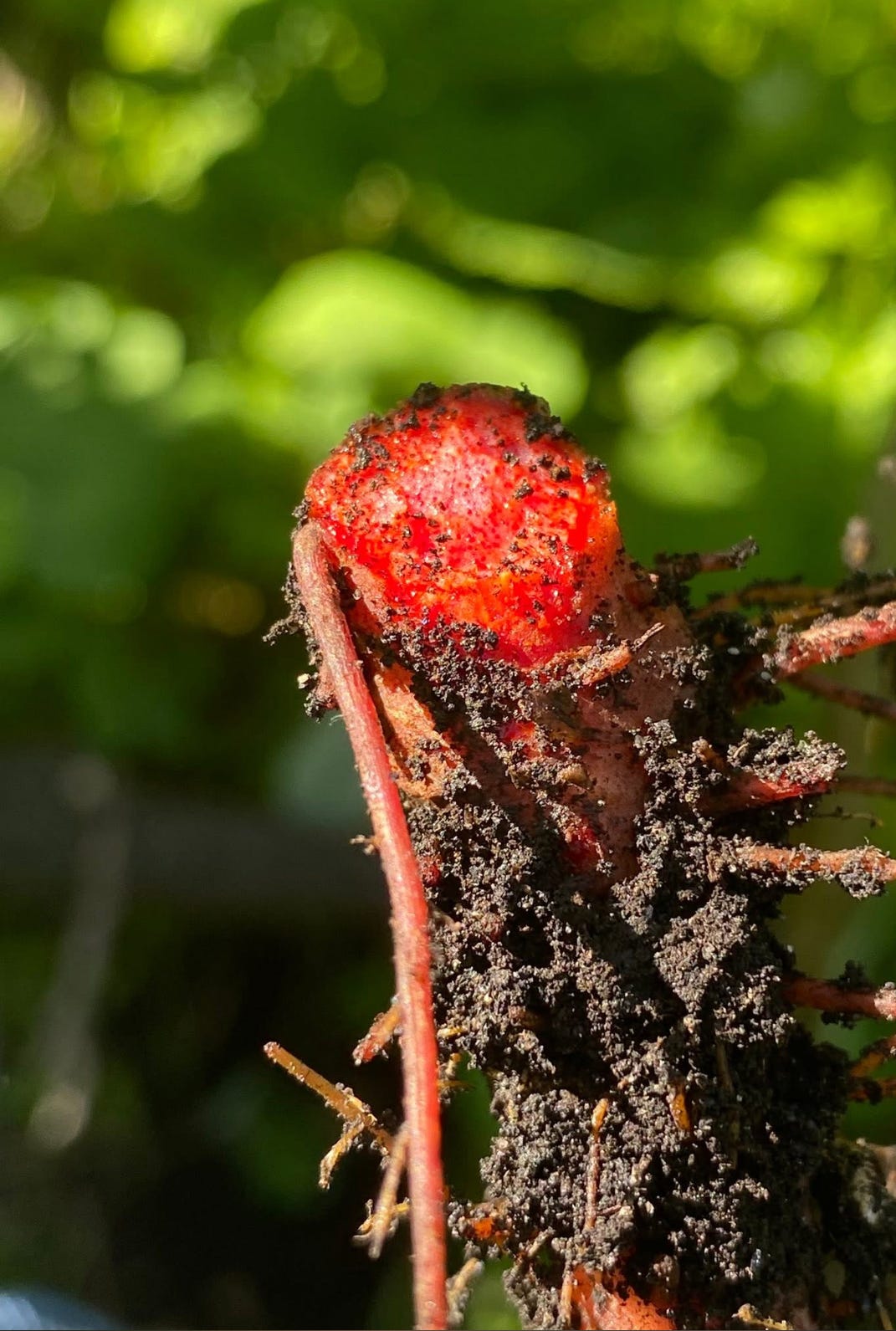
Bloodroot’s whorl of leaf encases the delicate stem, protecting the flower until it finally blooms. Anyone who has started seeds in the still-aired confines of their homes quickly learns that the leggy stems are susceptible to wind as soon as they’re taken outside to adjust to life in the real world. The Bloodroot eventually sheds the cloak of itself and as it opens its face to the sunlight, its root nodules foster bacteria, nitrogen, and a gossamer intimacy with mycelia to nourish itself on the earth. Every green of stem. Every brown and gray of bark. Every green and red and yellow of leaf. Every pinnacle of thorn. All of it is miraculously rendered from the soil, and light.
Today is one of those days. Despite the universe in a seed, despite the success of transplant, the seven Bloodroot blossoms are just that: seven flowers. We all have days like these where the magic isn’t magic, but simply is what is. We experience the doldrums, all of us sitting on the edge of our beds, dragging a sock over the foot of another day. Opening a door and closing it in that repetitive muscle memory. Of course the seed bursts open; what is needed is there. The plant has sap. That’s what plants do. The sap has color and it happens to be red. I stand here and stare at the ground, though, and somehow I’m still entranced. Sometimes all the looking inward is just a sign that one needs to spend more time looking outward.
I am reminded of Mary Oliver’s poem “I Go Down to the Shore” where she is humbled by the work and mechanism of what is:

Looking outward, it’s what I do. It isn’t the flower’s or the bird’s or the soil’s responsibility to acknowledge me and my futility. I unwrap my arms from around my body and turn around. Stepping into a puddle of light, I feel the sun on my face as I continue onward, finding the world.
The progression of Spring🙂
Oh, Sarah. Another beautiful and inspiring piece of your marvelous mind! I love how you wrapped the end with the what you began with. The first paragraph is a stunner!
Happy birthday (who cares what number?) to a woman I feel honored to know and to spend time with.